As an Amazon Associate, we earn from qualifying purchases. Some links on this site are affiliate links at no extra cost to you. Our recommendations are based on thorough research and editorial judgment.

What Are Ailerons, Elevators, And Rudders?

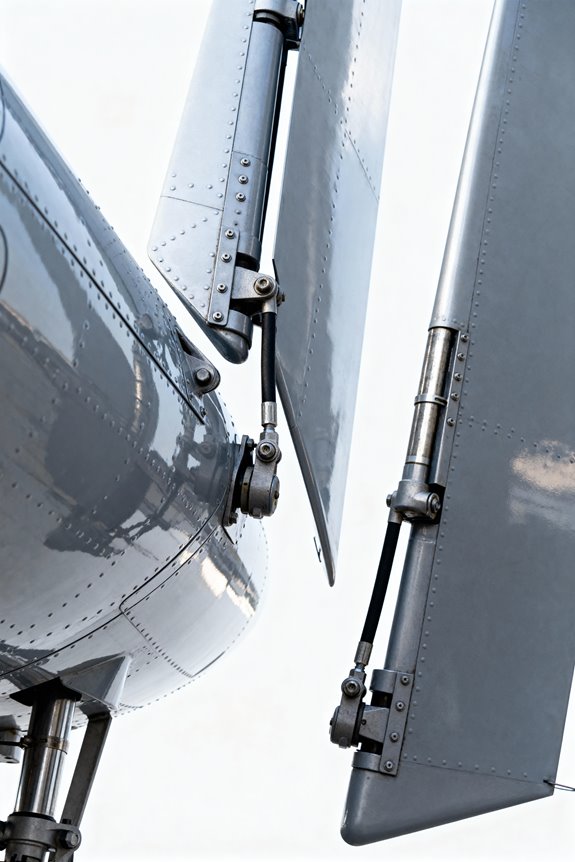
Ailerons, elevators, and rudders are essential control surfaces that enable pilots to guide an aircraft effectively.
- Ailerons are located on the wingtips and control roll by adjusting lift.
- Elevators on the tail manage pitch, helping to change the aircraft’s nose angle.
- Rudders help with yaw control, ensuring the aircraft aligns with its path.
You may be interested
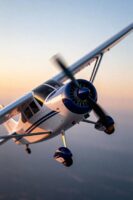

Together, they enhance stability and maneuverability in flight. Understanding these components reveals the intricacies of aircraft control systems.
Key Takeaways
- Ailerons are control surfaces on wings that manage roll by creating lift imbalances between the wings during flight.
- Elevators, located on the horizontal stabilizer, control an aircraft’s pitch, allowing adjustment of its nose position for altitude stability.
- Rudders are situated on the vertical stabilizer and control yaw, aligning the aircraft’s nose with its flight path.
- Ailerons, elevators, and rudders collaborate to maintain smooth and stable flight, responding to pilot commands for precise maneuverability.
- The effective use of these surfaces minimizes drag and enhances overall flight efficiency, critical for successful aviation operations.
The Role of Ailerons in Aircraft Control
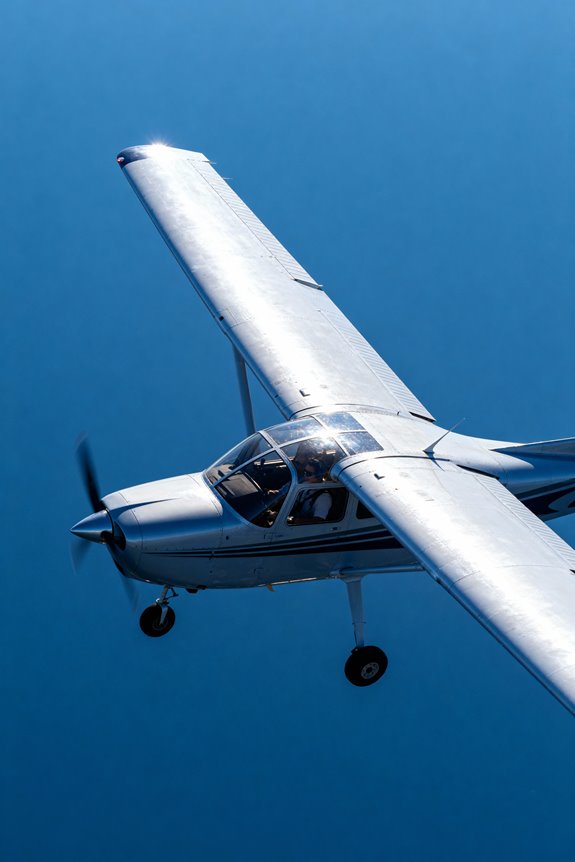
Ailerons play a vital role in aircraft control, serving as essential components for maneuvering and stability during flight. Located on the trailing edges near the wingtips, these hinged surfaces are designed to control roll dynamics by moving in opposition. When one aileron rises, the other descends, creating an imbalance in lift that tilts the aircraft.
Key Features:
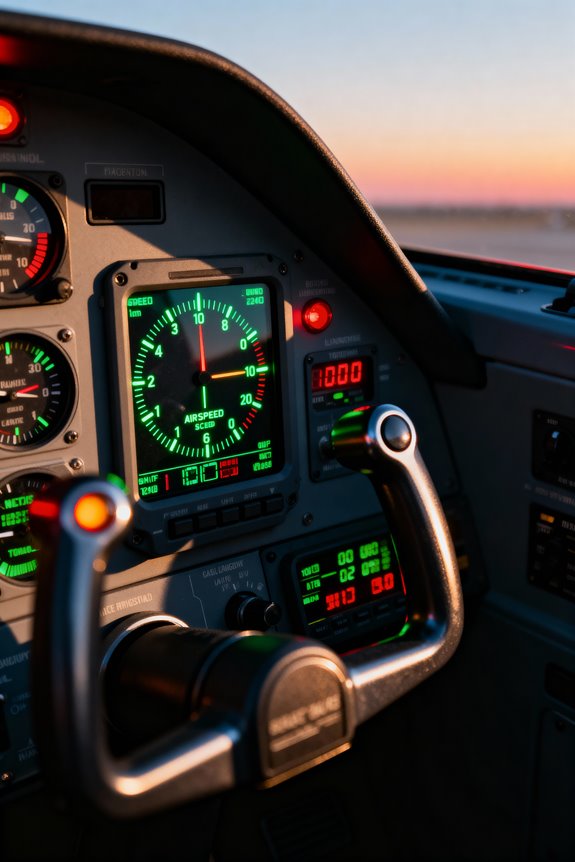
- Pilot Control: Ailerons respond to the yoke or side-stick, enabling precise maneuverability.
- Aerodynamic Function: Aileron design enhances lift on one wing while reducing it on the other, facilitating smooth turns.
- Coordinated Flight: Effective aileron use requires synchronizing with the rudder to counteract adverse yaw. Additionally, understanding aerodynamic principles is crucial for pilots to effectively utilize ailerons during flight maneuvers.
Together, these elements guarantee safe and effective navigation, fostering a sense of connection for all who soar.
Recommended Products

The easiest to buy, assemble and fly flat foamy model yet – capable of slow cruising, sport flying, basic and all-out 3D aerobatics
>Designed and authorized by bru_bri_mocs, the MOC-128557, 1/80 E-3 Sentry Large Jet Military Early-warning Aircraft Model maximizing the appearance of the aircraft features an original design, firm&reasonable structure and collection value for incredible building experience, after modified and reviewed many times.
Understanding Elevators and Their Function

Elevators are essential components of an aircraft’s control system, specifically managing pitch dynamics to secure stable flight. Located on the horizontal stabilizer’s trailing edge, elevators play an important role in adjusting the aircraft’s nose position. Typically, there are two elevators, one on each side, working symmetrically under pilot or autopilot commands for efficient control.
Key Features:
- Elevator Design: Includes mechanical linkages or advanced electronic systems for precise movements.
- Elevator Efficiency: Enhances fuel economy and comfort by maintaining desired flight attitudes. The design of elevators contributes significantly to aircraft control systems, allowing for more precise maneuvering during flight.
Using trim systems allows pilots to fine-tune the elevator’s neutral position, which reduces workload and guarantees stability. Ultimately, a well-designed elevator system is essential for safe and effective flight, contributing directly to operational performance.
Recommended Products

✈️【40 miles per charge& Airline Approved】 The Paiseec S3 Pro mobility scooter for adults with dual-battery, provides an incredible 40 miles per charge, giving you the confidence for all-day shopping, park visits, and family outings without worrying about running out of power. Best of all, the airline-approved additional battery is easily detachable, making it a breeze to take your scooter to the airport and enjoy seamless travel adventures. No more stress about distance or complex travel plans – just pure, effortless independence

🔋【40 Miles Range with 2 Battery | Airline Approved】The Paiseec S3 mobility scooter for seniors offers driving distance up to 40-mile range per charge with 2 lithium battery, which is three times longer than other mobility scooters. Powered by 37V 12Ah lithium battery and additional 36V 8Ah lithium battery, our electric mobility scooter is more durable and safer. The batteries are removable and the 36V 8Ah lithium battery is airline approved, perfect for mall trips, park visits, or travel

【400W Hall Sensor Brushless Motor for Smooth Rides】- The PAISEEC W1 electric wheelchair features a high-performance Hall sensor brushless motor, ensuring smooth starts, steady acceleration, and no jerky movements. With a top speed of 3.7 mph, this wheelchair offers a balance of power and control for all users.
The Importance of Rudders in Flight Maneuvering

Often overlooked yet essential to effective flight maneuvering, the rudder is an important control surface that manages yaw, or the rotation about an aircraft’s vertical axis. Its role is significant for maintaining yaw control during turns. The rudder works by deflecting to alter airflow, producing the side force needed to align the aircraft’s nose with its flight path.
Key Features:
- Adverse Yaw Correction: It counteracts the tendency to yaw opposite the direction of turn.
- Turn Coordination: Proper rudder input is necessary for smooth, balanced turns.
- Speed Dependency: Rudder effectiveness varies with airflow speed; more input is needed at low speeds.
Incorporating rudder inputs guarantees safer, more efficient flight, fostering a sense of connection among pilots and aircraft. Additionally, understanding TENS therapy can provide insights into the importance of precise control in managing various dynamics, similar to how rudders stabilize flight.
Recommended Products
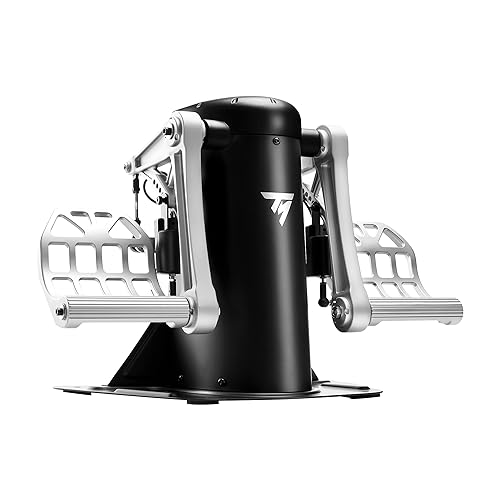
The TPR features Thrustmaster's PENDUL R technology: a unique, suspended mechanism ensuring smooth and fluid movements

300HP Hydraulic Steering Kit: QYMOPAY 300HP Marine Hydraulic Steering System includes a hydraulic cylinder, a hydraulic helm, two 24ft hoses and a complete set of fittings, it is the perfect replacement for aging or damaged hydraulic steering systems. It will free you from the heavy and inflexible mechanical soft shaft steering process, make your arms less sore, and let you enjoy the fun of driving a speedboat to the fullest

300HP Hydraulic Steering Kit: The Marine Hydraulic Steering System includes a hydraulic cylinder, a hydraulic rudder, two 24FT hoses, and a complete set of fittings, plus a stainless steel steering wheel that is the perfect replacement for an old or damaged hydraulic steering system, so your arms don't ache and you can enjoy driving your speedboat
How Control Surfaces Work Together
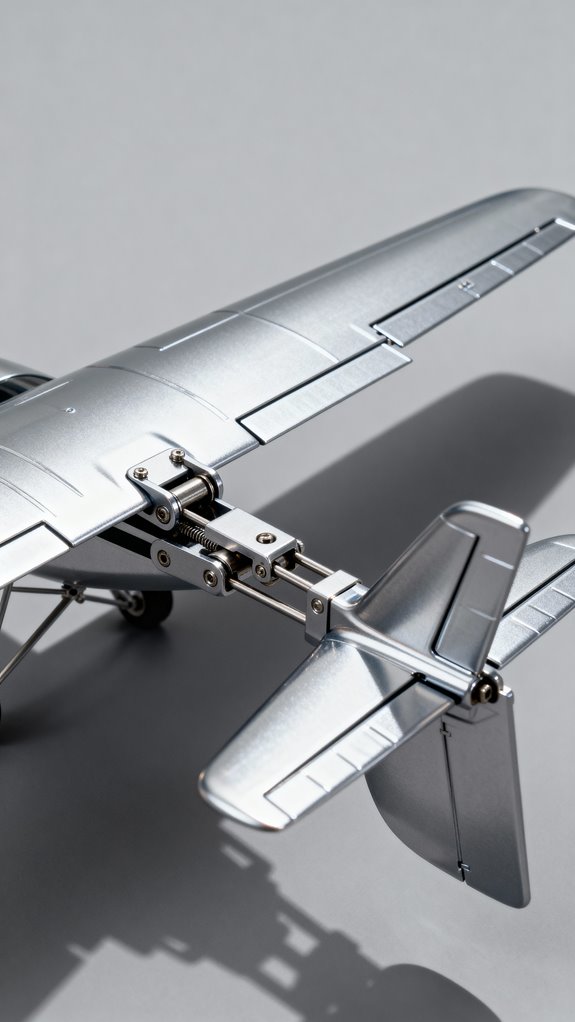
Controlling an aircraft involves a harmonious interplay of various control surfaces. Ailerons, elevators, and rudders work in concert to guarantee smooth flight and maximum stability.
- Control Surface Interaction: Ailerons initiate bank turns, while elevators maintain altitude and pitch. Rudders counteract adverse yaw, keeping the aircraft on the desired path.
- Flight Stability Enhancement: Coordinated use of these surfaces minimizes drag and enhances efficiency. This synergy allows pilots to execute controlled maneuvers confidently. Additionally, lightweight designs of modern aircraft contribute to improved performance and maneuverability.
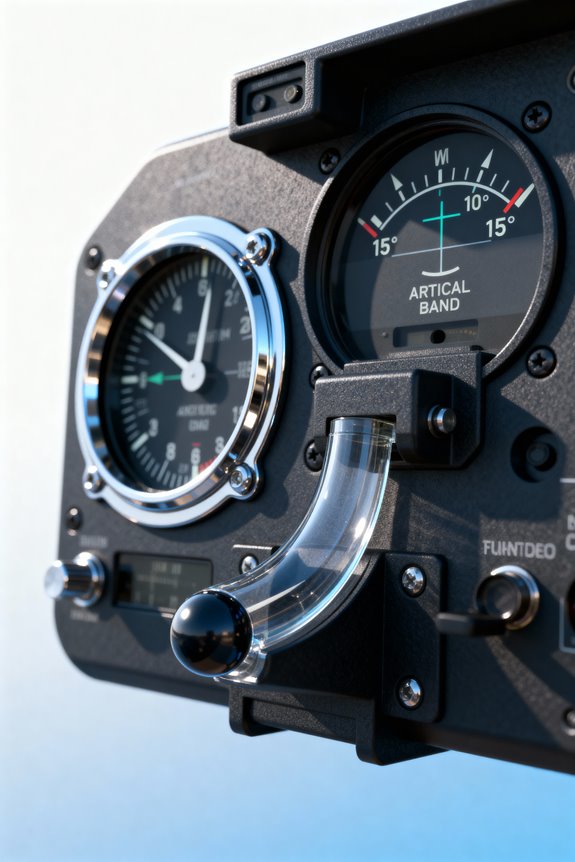
- Pilot Inputs: Pilots rely on a yoke and rudder pedals, enabling intuitive, simultaneous manipulation of these surfaces.
This seamless collaboration between control surfaces fosters a sense of unity among pilots, enhancing their experience and guaranteeing safer, more enjoyable flights.
Historical Significance and Advancements in Flight Controls
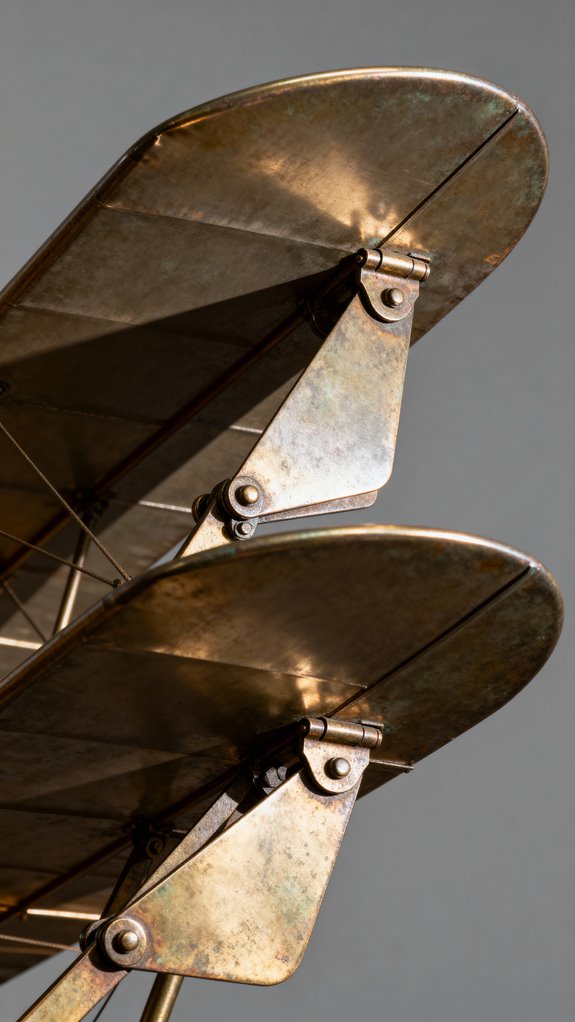
As the aviation industry evolved, the historical importance of flight control systems became increasingly evident. Early aviation pioneers like Sir George Cayley and Alphonse Penaud laid the groundwork, introducing concepts of pitch and yaw control essential for stable flight.
- Control Surface Evolution: Cayley’s glider featured the first movable surfaces, foreshadowing the designs used today.
- Advancements in Ailerons: The Wright brothers’ wing warping technique was eventually replaced by ailerons, markedly improving roll control.
- Safety and Efficiency: Innovations like wind tunnel testing and advanced materials enhanced the reliability of rudders, elevators, and ailerons, leading to safer flights and better maneuverability. Furthermore, 3-in-1 back massagers have also evolved to provide customizable features that enhance user comfort and satisfaction.
Frequently Asked Questions
What Materials Are Commonly Used for Ailerons, Elevators, and Rudders?
Material preferences for ailerons, elevators, and rudders include aluminum alloys, composites, and sometimes traditional materials. Design variations emphasize lightweight structures, balancing strength and aerodynamics, fostering a sense of unity in engineering practices among aviation enthusiasts.
How Do Ailerons, Elevators, and Rudders Affect Fuel Efficiency?
Like a skilled conductor orchestrating a symphony, ailerons, elevators, and rudders harmonize to enhance aerodynamic performance. Their careful manipulation minimizes drag, thereby reducing fuel consumption and creating a smooth journey through the skies for all aboard.
Can Pilots Control Ailerons, Elevators, and Rudders Simultaneously?
Pilots can indeed achieve simultaneous control of ailerons, elevators, and rudders through effective pilot coordination. This skill guarantees harmonious maneuvers, enhancing flight stability and safety while fostering a sense of connection within the aviation community.
What Safety Features Are Integrated With Control Surfaces?
Integrated safety features for control surfaces include extraordinary safety redundancy and automated systems, such as dual feedback loops and hydraulic actuations, ensuring precision and stability, while relentlessly safeguarding against unexpected movement and potential loss of control.
How Do Weather Conditions Impact the Effectiveness of These Control Surfaces?
Weather conditions, such as turbulence and extreme temperatures, considerably impact control surface effectiveness, causing responsiveness fluctuations and potential mechanical issues. Vigilance during flight guarantees safety and maintains the reliability of critical control mechanisms essential for navigation.