As an Amazon Associate, we earn from qualifying purchases. Some links on this site are affiliate links at no extra cost to you. Our recommendations are based on thorough research and editorial judgment.


What Is A Gyro And Why Is It Important?

A gyroscope is a device that uses angular momentum to maintain a stable orientation in space. It is essential for navigation and stabilization across various technologies, such as airplanes, ships, and smartphones. Key types include mechanical and MEMS gyroscopes, which offer robust stability and compact design. They enhance motion detection and improve features like camera stabilization. Understanding how gyroscopes operate reveals their significance in multiple fields, including aerospace and consumer electronics, sparking further interest in their applications.
Key Takeaways
- A gyroscope is a device that maintains fixed orientation using spinning rotors, crucial for navigation and stabilization in various technologies.
- It operates on principles of gyroscopic stability, resisting changes in orientation and providing real-time feedback on angular motion.
- Gyroscopes are essential in consumer electronics, enhancing motion detection in smartphones, tablets, gaming devices, and camera stabilization systems.
- They play a significant role in aerospace, marine navigation, robotics, and scientific research, allowing for precise control and measurement.
- The gyroscopic technology market is rapidly growing, with advancements in sensors leading to greater accuracy and applications in autonomous systems and aerospace.
Definition of a Gyroscope
You may be interested

3D Plane FAQs: Why Do I Need So Much Power?
December 2, 2025

How To Flash Firmware On Your Flight Controller And ESCs
December 2, 2025
How To Set Up Dual Rates And Expo On Your Transmitter
December 2, 2025
A gyroscope is a device that plays a vital role in navigation and stabilization across various technologies. Understanding the gyroscope history and terminology enhances one’s appreciation for its complexity and significance.
Key Components
- Rotor: A spinning disc that generates angular momentum.
- Gimbal Assembly: Comprising pivoted support rings, it allows free movement in multiple directions.
- Frame: Holds the entire structure, providing stability.
Functionality
Mechanical gyroscopes utilize angular momentum conservation to maintain their orientation. By being mounted on gimbals, they achieve three degrees of freedom, allowing them to resist changes in direction. Light therapy lamps, by simulating natural sunlight, can also enhance mood improvement, showcasing the diverse applications of precise control systems.
Through their essential features, gyroscopes provide critical orientation information relevant to navigation, ensuring devices like aircraft and drones maintain a fixed reference, creating a sense of belonging in complex systems reliant on precise control.
Basic Principles of Gyroscopic Motion

Gyroscopic motion encompasses several fundamental principles that explain how gyroscopes operate and interact with external forces. One important concept is gyroscopic stability, which allows gyroscopes to maintain a fixed orientation in space.
- Precession: This is the slow conical motion of the spin axis, responding perpendicularly to applied torque, illustrating how angular momentum remains conserved despite external influences.
- Nutation: A secondary wobble influenced by irregular torques, representing transient responses in the system, often dampened by resistive forces.
- Rigidity in Space: This property guarantees the spinning gyroscope resists external changes, providing consistency, which is vital for navigation and stabilization.
How Gyroscopes Function

How Gyroscopes Function
Understanding gyroscopes involves exploring their impressive functionality, which hinges on the principles of angular momentum and rotation.
Gyroscopes measure angular velocity, detecting how quickly an object rotates around its axis. They’re engineered with MEMS technology, allowing tiny masses to shift, converting physical movement into electrical signals. This measurement is essential for guaranteeing angular stability in various applications. Additionally, the auto shut-off feature in heating pads exemplifies how controlled mechanisms enhance safety and functionality in devices relying on precision engineering.
Precession plays a significant role in gyroscope dynamics. When torque is applied, the spin axis moves perpendicularly, enabling precise tracking of orientation changes. Feather-light friction in the bearings guarantees longevity and accurate performance.
Types of Gyroscopes

After gaining insight into the fundamental workings of gyroscopes, attention now shifts to the various types available, each offering unique features tailored for specific applications.
Ring Laser Gyroscope
- Based on the Sagnac effect, it measures rotation through two light beams in a ring.
- Known for high precision, often used in aerospace, and has no moving parts.
Fiber Optic Gyroscope
- Utilizes coils of fiber optic cables, also leveraging the Sagnac effect.
- Favored for its robustness and low maintenance, ideal for aircraft navigation.
Gas Bearing Gyroscope
- Suspends the rotor with pressurized gas, extremely quiet and durable.
- Used in the Hubble Space Telescope for precise control.
Hemispherical Resonator Gyroscope
– Features a resonating shell for high stability, perfect for military applications.
Vibrating Structure Gyroscopes
– Employs Coriolis forces in vibrating elements, balancing cost and precision for various industries. Additionally, customizable experiences with various intensity levels and settings in foot massagers can enhance user comfort and satisfaction.
Recommended Products
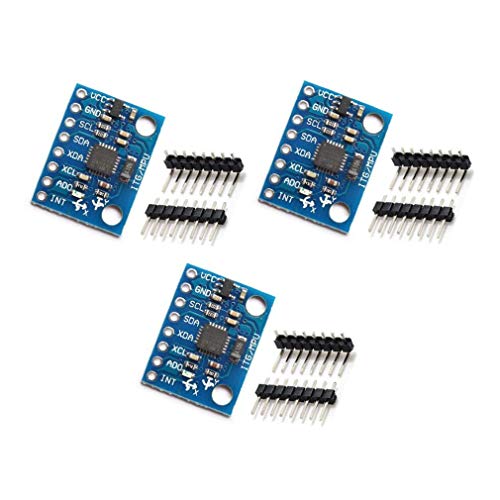
MPU-6050 MPU6050 6-axis Accelerometer Gyroscope Sensor

♥Product parameters: The chip used: MPU-6050 Power supply: 3-5v (internal low dropout voltage regulator) Communication method: standard IIC communication protocol Chip built-in 16bit AD converter, 16bit data output Gyroscope range: +250 500 1000 2000 °/s Acceleration range: ±2 ± 4 ± 8 ± 16g Using immersion gold PCB, machine welding process to ensure quality Pin pitch: 2.54mm

6-Axis Motion Tracking Sensor: The MPU-6050 IMU module integrates a 3-axis accelerometer and 3-axis gyroscope, enabling precise motion tracking, orientation detection, and angle measurement for a wide range of applications.
Mechanical vs. MEMS Gyroscopes

Recommended Products
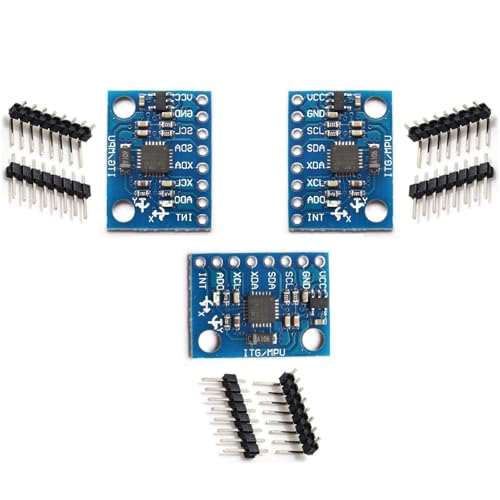
Product Name MPU-6050 MPU6050 6-Axis Accelerometer Gyro Sensor, which is a key component for motion sensing applications.

MPU-6050 MPU6050 6-axis Accelerometer Gyroscope Sensor

MPU-6050 MPU6050 Module: adopts the standard IIC communication for communication and is powered by 3V-5V for sustainable use.
Mechanical vs. MEMS Gyroscopes
When comparing mechanical and MEMS gyroscopes, it becomes clear that each type serves distinct purposes and offers unique advantages tailored to specific needs.
Mechanical Gyroscopes
- Characteristics: Use a spinning rotor for orientation and stabilization, relying on mechanical parts.
- Mechanical Advantages: Known for robustness and direct physical stabilization, these are ideal for aviation and marine navigation.
MEMS Gyroscopes
- Design: Compact and lightweight, these utilize vibrating microstructures on silicon chips.
- Benefits: Lower power consumption and higher reliability make them perfect for consumer devices and drones. Additionally, low-level laser therapy devices have seen increased adoption in various consumer technologies, highlighting the trend towards integrating advanced gyroscopic functions for enhanced performance.
In a gyroscope comparison, while mechanical gyroscopes excel in precision, MEMS gyroscopes dominate in affordability and size, catering to modern technology’s demands.
Advanced Gyroscopic Technologies
The landscape of gyroscopic technology has evolved considerably beyond traditional mechanical and MEMS types, showcasing advancements that cater to a wide variety of applications.
Optical Gyroscopes
These utilize light interference for exceptional precision, featuring both Ring Laser and Fiber Optic designs. They are employed in aerospace for reliable navigation without moving parts.
Quantum Gyroscopes
Leveraging quantum phenomena, they promise next-level sensitivity. NMR and atom interferometry techniques can potentially outperform classical gyros.
Dynamically Tuned Gyroscopes
These offer superior bias stability by fine-tuning rotor frequencies, making them ideal for tactical applications.
Hybrid Technologies
By integrating MEMS with optical systems, they improve accuracy while reducing drift, paving the way for broader uses in both defense and consumer markets. The benefits of advanced technologies signify a leap towards enhanced precision navigation and gyroscopic integration in our dynamic world.
Recommended Products

【Modle】The FS-N18 fiber-optic amplifier provides ultra-stable performance and smart tuning for high-speed, reliable detection for standard or demanding applications.
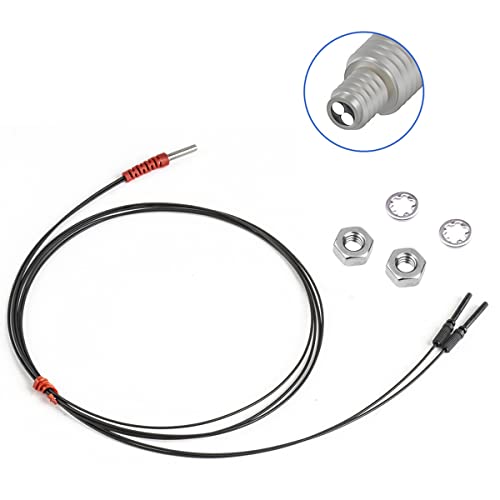
【Working Principle】Optical fiber sensor is a kind of sensor which changes the state of the measured object into measurable optical signal.

Applications in Navigation
Gyroscopes play an essential role in various navigation systems, ensuring accurate positioning and orientation across multiple fields. Inertial navigation systems (INS) utilize gyroscopes and accelerometers, determining position and velocity without relying on external signals.
Key Features:
- Dead Reckoning: This method estimates current position using gyroscope data, critical in environments where GPS is unavailable, such as underwater or military scenarios.
- Gyrocompassing: High-performance gyroscopes detect Earth’s angular velocity, providing precise heading information, crucial for navigation.
Benefits:
- Stability in Aviation: Gyroscopes maintain aircraft orientation, especially in poor visibility.
- Spacecraft Control: They enable important maneuvers in environments devoid of atmospheric references. Additionally, gyroscopes contribute to enhancing blood circulation in various applications by providing stability and accurate orientation data.
Together, these applications make gyroscopes indispensable for reliable and effective navigation across various domains.
Recommended Products


Role in Stability and Control
In the domain of stability and control, the role of gyroscopes is essential. These devices deliver gyroscopic stability by resisting any change in orientation, making them integral for many applications.
- Mechanical Resistance: Gyroscopes maintain their spinning axis, opposing external forces that disrupt stability, critical for aerospace and marine crafts.
- Dynamic Control: They provide real-time feedback on angular motion, allowing systems to actively counteract disturbances.
- Precision Applications: Higher update rates enhance compensation accuracy. This is fundamental for platforms dealing with multi-degree-of-freedom motion, ensuring stability in unpredictable environments.
- Military Use: In remote weapons stations, gyroscopes improve aiming accuracy by compensating for platform vibrations, ensuring consistent performance.
Use in Consumer Electronics
As technology evolves, the integration of gyroscopes into consumer electronics has become increasingly significant. These sensors are pivotal for motion detection, enhancing various consumer applications:
- Smartphones and Tablets: Devices like the iPhone 5s and Samsung Galaxy Note 4 utilize gyroscopes for features such as PhotoSphere and immersive virtual reality experiences.
- Gaming Devices: Controllers like the Nintendo Wii Remote and Nintendo Switch Joy-Con benefit from gyroscopes for precise motion tracking, offering intuitive gameplay.
- Camera Stabilization: Gyroscopes improve image quality by providing real-time stabilization, critical for mobile photography and video recording.
Recommended Products
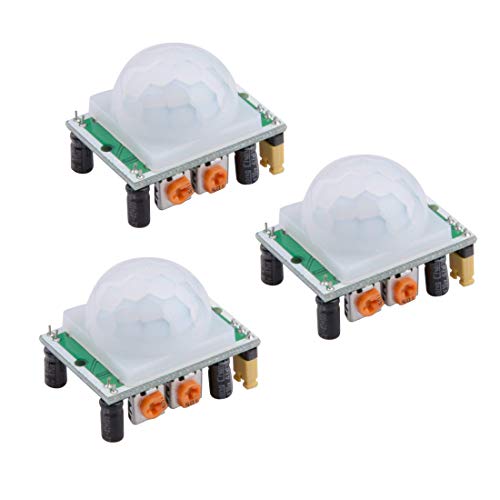
HiLetgo 3pcs HC-SR501 PIR Infrared Sensor Human Body Infrared Motion Module for Arduino Raspberry Pi
Operating voltage range: DC 4.5-20V

Product Name MPU-6050 MPU6050 6-Axis Accelerometer Gyro Sensor, which is a key component for motion sensing applications.

WWZMDiB 5 Pcs PIR Sensor: When a human body enters the sensing range, the temperature difference between the body and the background causes a voltage change in the pyroelectric device. After amplification and comparison, the voltage signal is output.
Significance in Scientific Research
While many may associate gyroscopic technology with consumer devices, its significance in scientific research spans a wide array of fields, showcasing innovative applications and enhancing measurement capabilities.
Research Advancements
- Precision Navigation: Atomic gyroscopes provide incredibly accurate inertial navigation without external references, essential for submarines and aircraft.
- Measurement Sensitivity: Optical gyroscopes, enhanced by advanced materials, improve detection and resolution, imperative for geophysical research.
Scientific Impact
- Diverse Applications: Gyroscopes are fundamental in robotics, marine navigation, and earthquake monitoring, reflecting their extensive use.
- Space Exploration: They guarantee the stability and accuracy of satellites, crucial for data collection.
These advancements highlight how gyroscopic technology continues to reshape scientific methodology, pushing the boundaries of what is possible in research and exploration.
Understanding Gyroscopic Effects
Gyroscopic effects play a pivotal role in understanding the behavior of rotating bodies and their resistance to external forces. At the heart of this phenomenon is angular momentum, which guarantees that a gyroscope maintains its orientation, exhibiting remarkable gyroscopic stability.
Key characteristics include:
- Resistance to Changes: A spinning object resists attempts to alter its rotational axis, showcasing its stability.
- Precession: When external torque is applied, instead of tipping over, the gyroscope shifts direction slowly in a predictable manner.
- Applying the Right-Hand Rule: This guideline helps in determining the orientation of angular momentum and torque vectors.
Such behavior not only exemplifies fascinating physics but also embodies essential principles for various applications in technology, navigation, and engineering, fostering a greater appreciation for the world around us.
Future of Gyroscopic Technology
What factors will shape the future of gyroscopic technology? As the market evolves, several future trends and developments are expected to emerge:
- Market Growth: Projections indicate the gyroscopic technology market could reach multi-billion USD levels. Fiber optic gyroscopes alone may grow from $1.9 billion in 2026 to $4.49 billion by 2035, with a 14.2% compound annual growth rate (CAGR).
- Technological Innovations: Advances like digital ring laser gyroscopes improve accuracy and durability, while MEMS technology enables smaller, cost-effective sensors.
- Application Expansion: Gyroscopes are finding uses in autonomous vehicles, robotics, and aerospace sectors. Their integration enhances navigation in challenging environments.
- Defense Investment: Government funding in advanced navigation systems signals a robust future for high-precision gyroscopes, affirming their vital role across industries.
Frequently Asked Questions
How Do Gyroscopes Differ From Accelerometers?
In the dance of motion, gyroscopes spin with angular precision, distinguishing themselves from accelerometers, which measure linear movement. Various gyroscope types serve pivotal applications, guiding navigation and enhancing technological harmony across diverse fields.
Can Gyroscopes Be Affected by Magnetic Fields?
Yes, gyroscopes can be affected by magnetic interference, which disrupts sensor bias and measurements. Proper calibration is essential to counter such disturbances, ensuring accurate angular velocity readings and maintaining reliability in various applications.
What Materials Are Commonly Used in Gyroscope Construction?
Commonly used material types in gyroscope construction include metals like nickel and aluminum for strength, polymers such as SU8 for flexibility, and ceramics like silicon carbide for durability, enhancing performance through various innovative construction methods.
How Does Temperature Affect Gyroscope Performance?
Temperature impacts gyroscope performance greatly, leading to performance degradation. Variations in thermal conditions alter material properties, affecting bias, scale factor, and precision, necessitating compensation strategies for reliable operation in diverse navigational applications.
Are Gyroscopes Used in Gaming Beyond Motion Sensing?
“As the saying goes, ‘the whole is greater than the sum of its parts.’ Gyroscopes enhance game mechanics considerably, enabling intuitive interactions in virtual reality and immersive experiences beyond mere motion sensing, enriching gameplay for all.”

