As an Amazon Associate, we earn from qualifying purchases. Some links on this site are affiliate links at no extra cost to you. Our recommendations are based on thorough research and editorial judgment.


What Is A Foamy” 3D Plane?”

Foamy 3D planes are lightweight radio-controlled aircraft specially designed for aerobatics. Constructed from materials like PolyAir and foam board, they feature oversized control surfaces for dynamic maneuverability. Pilots can perform advanced tricks like hovering and prop hanging. With easy assembly and cost effectiveness, they cater to various skill levels. However, challenges like wind sensitivity and balance require adept handling. Interested enthusiasts can explore more about construction, popular models, and flight characteristics in the extensive guide to foamy planes.
Key Takeaways
- A foamy 3D plane is a type of radio-controlled aircraft designed for extreme aerobatic maneuvers and precise control.
- It is constructed using lightweight materials like PolyAir 1.0 and foam board, enhancing agility and responsiveness.
- These planes feature large control surfaces, allowing for aggressive maneuvers such as hovering and prop hanging at low speeds.
- They are customizable, enabling pilots to tweak settings for tailored flight responses based on individual preferences.
- Foamy 3D planes are beginner-friendly due to their ease of construction and lightweight design, making them accessible to hobbyists.
Definition of Foamy 3D Planes
You may be interested


Foamy 3D planes represent a fascinating category of radio-controlled aircraft, engineered for exhilarating aerobatics and extreme control. These models feature a unique foamy construction that prioritizes lightweight materials, enhancing their agility and responsiveness.
Key Features:
- Aerobatic Capability: Designed for aggressive 3D maneuvers like hovering, knife-edge flight, and prop hanging.
- Control Surfaces: Equipped with large elevators, rudders, and ailerons to provide exaggerated control inputs essential for dynamic flight.
Benefits:
- Agility: Short tail moment arms improve pitch responsiveness, allowing for complex maneuvers.
- Balanced Flight: Optimized center of gravity enhances stability and control during flights. Additionally, the use of lightweight materials in their construction contributes significantly to their performance and ease of handling.
Foamy 3D planes invite enthusiasts to experience the thrill of precision flying, making them a popular choice among hobbyists seeking belonging in the RC community.
Materials Used in Construction

When constructing a foamy 3D plane, the selection of materials considerably impacts performance and durability. A materials comparison reveals several options:
- PolyAir 1.0: Recommended for its impact resistance and layer adhesion, enabling longer lifespan printed parts.
- PLA and LW-PLA: Popular for ease of printing and suitable for high G maneuvers; they offer lightweight options without sacrificing stiffness.
- Foam Board: Ideal for models under a 60-inch wingspan, easily cut and glued for durable joints.
- Balsa Wood: Provides a superb strength-to-weight ratio while being easy to cut and sand.
- Reinforcements: Plywood is often used at stress points, ensuring lasting durability.
These materials combine flexibility and resilience, enhancing foamy 3D planes’ overall performance and craftsmanship. Additionally, using machine-washable materials can further increase the longevity of the models, similar to how heating pads benefit from durable fabric options.
Recommended Products

Safer Battery Design: Equipped with 2 packs side slide-in batteries, featuring a safer and more robust aerospace-grade aluminum alloy construction.which is superior to its stability and flexibility.

Double Teeter-Totter: Up, Down, and Side-to-Side Movement Design

3° Canted Footbed – For Natural Body Positioning
Flight Characteristics of 3D Planes

The flight characteristics of 3D planes set them apart in the world of aerodynamics, allowing for an exhilarating range of maneuvers not typical of conventional aircraft.
- Stall Characteristics: These planes thrive in stalled conditions, leveraging propeller thrust and specialized control surfaces to maintain maneuverability at low speeds.
- Control Surfaces: Oversized elevators, ailerons, and rudders provide extreme deflection, enhancing control even in post-stall scenarios.
With a slightly nose-heavy center of gravity, 3D planes guarantee responsive handling, preventing unstable landings.
The design allows for high angles of attack, meaning these aircraft can perform hovering, harriers, and even near-vertical descents with finesse. Additionally, the incorporation of customizable settings enables pilots to tailor their control responses, enhancing the overall flying experience.
Mastering these unique flight features fosters a deeper connection among enthusiasts, ensuring 3D pilots enjoy an engaging and rewarding experience.
Aerobatics and Performance

Engaging in aerobatics with 3D planes opens up a world of thrilling maneuvers and high-performance flying. Mastering aerobatic techniques, such as hovering, harriers, and torque rolls, showcases a plane’s supermaneuverability.
- Performance Dynamics: Lightweight foams and internal spars guarantee structural integrity, allowing for extreme control deflections.
- Control Surfaces: Large surfaces provide the necessary responsiveness for low-speed and post-stall maneuvers.
- Thrust Vectoring: Some models utilize thrust vectoring, enhancing control during aggressive aerobatic sequences.
With efficient power systems, including brushless motors, pilots can enjoy sustained vertical climbs and dynamic routines. The fusion of advanced design features and skilled piloting makes 3D flight exhilarating, inviting enthusiasts to push their limits while cultivating a strong community of flyers. Additionally, the use of pure peppermint essential oil can be beneficial for relaxation after intense flying sessions, helping pilots unwind and rejuvenate.
Design Process of Foamy Planes

Designing foamy planes requires a meticulous approach to secure both performance and durability. The process begins with accurate measuring and cutting, pivotal for achieving quality and fit. Using templates simplifies this step, allowing for precision in layout. Foam optimization plays a key role, as lightweight foam board is chosen for its affordability and ease of use.
Incorporating design iterations through 3D CAD software secures parts fit seamlessly, while also allowing for the adjustment of airfoil profiles and component placements. During assembly, careful attention to joints and structural integrity is essential. Testing prototypes offers invaluable feedback, refining design for balance and control. Ultimately, creating foamy planes is a blend of creativity and engineering, fostering a sense of community in a shared passion for flight. Additionally, understanding material quality and comfort can significantly enhance the overall performance and user experience of the final product.
Drafting and Simulation Techniques
Effective drafting and simulation techniques serve as the backbone of creating foamy 3D planes, ensuring precision and functionality in each build.
Drafting Techniques
- Templates or detailed plans on large printers enhance cutting accuracy.
- Maintaining a 100% scale prevents dimensional mismatches.
Simulation Software
- CAD programs, like Fusion 360, enable the design of parts with precise folds and symmetry.
- Digital models allow for accurate adjustments to foam thickness and form, improving assembly outcomes.
These techniques minimize trial-and-error in physical construction, promoting a confident workflow. By employing drafting techniques and simulation software, creators can realize their designs with confidence, building strong, functional foamy planes that reflect their aspirations. Additionally, the ergonomic designs used in tools like massage guns can inspire innovative approaches to creating user-friendly structures in 3D plane designs.
Construction Techniques
Constructing a foamy 3D plane requires a systematic approach that combines careful planning and skilled execution.
Foam Selection
Choosing the right foam is crucial. Lightweight foamboard is preferred for its ease in cutting and shaping, while maintaining durability. This balance is essential for overall performance.
Wing Design
To create effective wing designs, use aluminum or carbon fiber tubes as main structural struts. These materials provide durability over wooden dowels. Cutting tubes to length guarantees proper alignment with the fuselage.
For additional wing support, glue rectangular foam pieces and utilize tape to maintain flatness during assembly. Incorporating slight tapers and guaranteeing perpendicular placements bolsters rigidity. Following these techniques fosters a successful construction experience, enticing enthusiasts to engage deeply in their creations.
Assembly of Electronic Components
After laying the groundwork for a robust foamy 3D plane, the next phase involves the assembly of electronic components, which greatly enhances the aircraft’s functionality and performance.
Component Selection:
- Motors: Use brushless motors like 2207 2300kv, compatible with four-cell LiPo batteries.
- Servos: Opt for standard 9-gram servos to control surfaces efficiently.
- ESCs: Choose 30+ amp electronic speed controllers for peak current handling.
Assembly Techniques:
- Guarantee proper wiring, with 3.5mm bullet connectors for motors and XT60 connectors for batteries, safeguarding against polarity errors.
- Utilize heat shrink tubing on soldered joints for durability.
- Maintain accurate tolerances during assembly to guarantee smooth functionality, avoiding stress on wiring and components.
This meticulous approach secures a reliable and enjoyable flying experience.
Recommended Products

Pro-level Drag Brake performance and adjustability

New sensored design allows for smoother starts and better low end throttle control while Retaining high Torque and power of our previous motors

High-Performance Brushless Motor:T238 BL-480 delivers instant trigger response, ultra-high efficiency, and superior durability—perfect for competitive AEG and gel blaster builds like DMR, CQB, and speedsoft.
Popular Models on the Market
When exploring the vibrant landscape of foamy 3D planes, enthusiasts discover a variety of popular models that cater to differing skill levels and flying styles.
Popular Beginner Models:
- HobbyZone AeroScout S 2.1m: Features Spektrum SAFE technology for stability, ideal for new pilots learning safe flying. Its durable design allows for easy takeoffs and landings.
- TH 32″ EPP Sbach Green: Aimed at both beginners and experienced flyers, it excels in compact spaces, priced at approximately $94.99.
Advanced Designs:
- TH 32″ EPP Crack Laser Lite: Offers cutting-edge performance with advanced features, retailing for about $97.99.
- AIOS Extra NG: A semi-scale plane with a 1600 mm wingspan, tailored for intermediate and experienced pilots seeking high-performance aerobatics.
Recommended Products

The easiest to buy, assemble and fly flat foamy model yet – capable of slow cruising, sport flying, basic and all-out 3D aerobatics
The easiest to buy, assemble and fly flat foamy model yet – capable of slow cruising, sport flying, basic and all-out 3D aerobatics
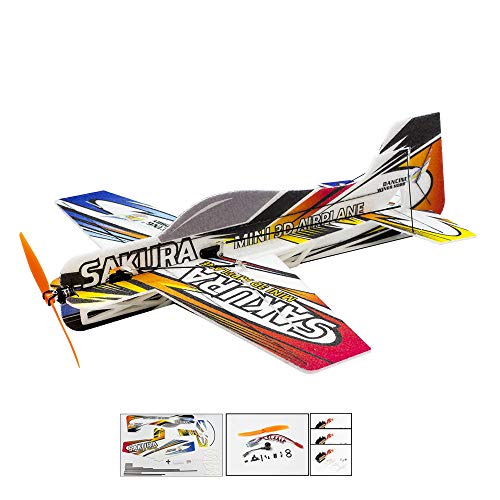
✔️Ultra-durable and lightweight EPP construction embedded in carbon rods to ensure impact resistance.
Advantages of Foamy 3D Planes
Foamy 3D planes offer numerous advantages that make them a favorite among both novice and experienced pilots.
Recommended Products


DW Hobby Remote Control 3D EPP Sports 1.0M Airplane P-51 Fighter for Adults Need to Assemble (E4504)
1000mm 3D EPP Sports P-51 Fighter;

Lightweight and Airworthy
Their construction from low-density foam types, like EPP, enhances maneuverability and responsiveness, essential for 3D aerobatics.
Durability
These models are resilient, able to flex under stress rather than break, which guarantees longevity even after minor crashes.
Ease of Construction
Foam sheets allow for easy cutting and customization, enabling quick assembly for various pilot skills.
Cost-Effective
Being relatively inexpensive lowers entry barriers for hobbyists, making advanced designs accessible without major financial risk.
Flight Performance
Electric motors in foam models reduce vibration, leading to smoother control, boosting pilot confidence in exploring new flying techniques.
Challenges Faced by Pilots
Pilots of foamy 3D planes encounter a variety of challenges that can add complexity to their flying experience.
Structural Concerns
Foam materials, while lightweight, can suffer from damage during hard impacts, affecting flight precision. High-energy maneuvers may also lead to structural failures, as foam lacks superior resilience.
Flight Handling
Foam planes are sensitive to wind, resulting in control challenges during advanced maneuvers like inverted flight. Maintaining proper control at low speeds demands refined pilot techniques to guarantee a smooth landing.
Weight Distribution
Optimizing battery and component placement is essential for maintaining balance and avoiding unwanted pitch. Adjustments may be needed frequently to counter changes in trim, often taxing the pilot’s workload.
In mastering these challenges, pilots enhance their skills and overall flying experience, fostering a sense of community among enthusiasts.
The Future of Foamy 3D Planes
The evolution of foamy 3D planes is poised to reshape the landscape of remote-controlled flying.
Future Trends and Innovations
- Advanced Materials: Integration of EPP foam enhances durability and self-healing, allowing for multiple flights even after collisions.
- Aerodynamic Design: Innovations in computer simulations optimize wing shapes and weight distribution, improving lift and handling.
- Smart Integration: New electronic components will enhance control and stability, making flights smoother and more dynamic.
These technological innovations will foster a growing community of aspiring pilots, encouraging experimentation and improving skills. With enhanced durability, accessibility becoming paramount, foamy 3D planes will captivate hobbyists and professionals alike. As the future unfolds, these planes promise not just performance, but an inclusive platform for shared experiences in the world of flight.
Frequently Asked Questions
How Much Does It Cost to Build a Foamy 3D Plane?
Building a foamy 3D plane typically costs between $100 and $400. Material costs and design considerations greatly impact the total, as quality components and detailed designs enhance performance, fostering a rewarding experience for hobbyists.
What Tools Do I Need to Construct a Foamy 3D Plane?
To construct a foamy 3D plane, one needs an arsenal of tools—razor knives for precision, hot glue for strong bonds, and measuring tapes for accuracy, igniting creativity through design techniques and foam materials that inspire connection.
Can Foamy Planes Be Used for Beginners?
Foamy planes are excellent for beginners. Constructed from durable foam materials, they provide forgiving flight characteristics and manageable speeds. Beginner tips emphasize their affordability and ease of repair, fostering a welcoming environment for new enthusiasts.
How Do I Troubleshoot Common Issues With Foamy Planes?
To troubleshoot common issues with foamy planes, verify battery connections are secure and correctly rated. Additionally, check wing alignment for proper balance, as misalignment can greatly affect flight performance and overall experience in the hobby.
What Maintenance Is Required for Foamy 3D Planes?
After a successful flight, a hobbyist guaranteed battery care and used effective repair techniques. Regular checks, gentle cleaning, and prompt repairs of foam and electronic components maintain peak performance, fostering camaraderie and shared success within the flying community.