As an Amazon Associate, we earn from qualifying purchases. Some links on this site are affiliate links at no extra cost to you. Our recommendations are based on thorough research and editorial judgment.


How To Choose Your First RC Airplane

Choosing the right RC airplane involves understanding different types and their features. Trainer airplanes offer stability for beginners, while aerobatic planes cater to more experienced pilots. Consider size and wingspan; larger planes provide better lift and stability, essential for novices. Motor options, like outrunner motors, offer varied performance levels. Safety is critical—ensure you check conditions and follow maintenance tips to prolong lifespan. Exploring key components will enhance your flying experience, leading to mastery in this thrilling hobby.
Key Takeaways
- Opt for a trainer airplane with a high-wing design for enhanced stability, making it easier for beginners to learn flying skills.
- Consider the size and wingspan; larger planes offer better lift and easier control, while smaller models are portable but may lack stability.
- Choose an electric-powered park flyer for confined spaces, focusing on user-friendly features ideal for novice pilots and family-friendly adventures.
- Look for models equipped with stabilization aids like SAFE or AS3X to help maintain level flight and improve control during your first flights.
- Join local clubs or online communities for support, mentorship, and access to resources that facilitate learning and improve your flying experience.
Understanding Different Types of RC Airplanes
You may be interested


When diving into the world of remote-controlled (RC) airplanes, understanding the various types available is crucial for selecting the best model for a beginner.
Trainer Airplanes
- Trainer Features: High-wing design guarantees stability, ideal for novice pilots.
- Propulsion Types: Commonly powered by electric motors or nitro engines, offering easy operation.
Aerobatic Planes
– Aerobatic Capabilities: Designed for intermediate pilots, with mid or low wings for maneuverability.
Gliders and Powered Gliders
– Glider Dynamics: Motorless flight that uses air currents for serene experiences.
Park Flyers
– Park Flyer Benefits: Small, electric planes that can be flown in confined spaces, making them family-friendly and accessible.
Each type offers unique features that facilitate skills progression and foster a sense of community among hobbyists.
Size and Wingspan: What to Consider

Choosing the right wingspan for an RC airplane can greatly impact a pilot’s flying experience.
Recommended Products

EASY TO FLY RC AIRPLANE: Equipped with exclusive SAFE technology that helps prevent crashes and makes it easy to learn how to fly.

Updated and upgraded to be easier to fly and to offer improved scale-like, sport flying, higher speed and higher energy aerobatic capabilities

An officially-licensed* replica of the world’s fastest and highest-flying manned aircraft that offers a flying experience unlike any other model
Wingspan Stability
Larger wingspans offer more lift and stability, allowing for slow, controlled flights—ideal for beginners. In contrast, small wingspan planes are faster and less stable, requiring quicker reflexes.
Transport Considerations
When selecting a wingspan, consider transport needs. Many pilots prefer wingspans around 5 feet (150 cm) to fit standard car trunks. Smaller models, under 50 cm, are easy to carry but may lack robustness for outdoor flying. Larger planes provide greater visibility and wind resistance but necessitate more storage space and careful handling. Additionally, choosing an ergonomic design can enhance the overall flying experience and comfort during transport.
Ultimately, selecting the right size optimizes both stability in flight and ease of transport, enhancing the joy of flying for newcomers.
Exploring Motor and Propulsion Options

Recommended Products

The easiest to fly and best handling high-performance airliner EDF (Electric Ducted Fan) jet model yet
The easiest to fly and best handling high-performance airliner EDF (Electric Ducted Fan) jet model yet

Not just another Timber; it’s the most capable, durable, stable, and unique Timber model yet
Motor Types
Two main motor types exist: outrunner for greater torque, ideal for fixed-wing planes, and inrunner, which offers higher RPM for helicopters.
KV Ratings
Understanding KV ratings helps estimate how battery voltage corresponds to prop RPM, ensuring effective flight dynamics.
Battery Compatibility
Pairing the motor with compatible batteries is important; choose motors with continuous current ratings that exceed expected draws to avoid overheating.
Power Requirements
Consider watts-per-pound; over 150 W/lb suits aerobatic models, while around 50 W/lb is perfect for gliders.
Motor Sizes
Account for motor dimension and mounting clearance. Ensuring the right fit enhances both performance and safety, leading to a smoother flying experience. Additionally, safety features are crucial for preventing overheating and ensuring reliable operation during flights.
Importance of Safety and Environment
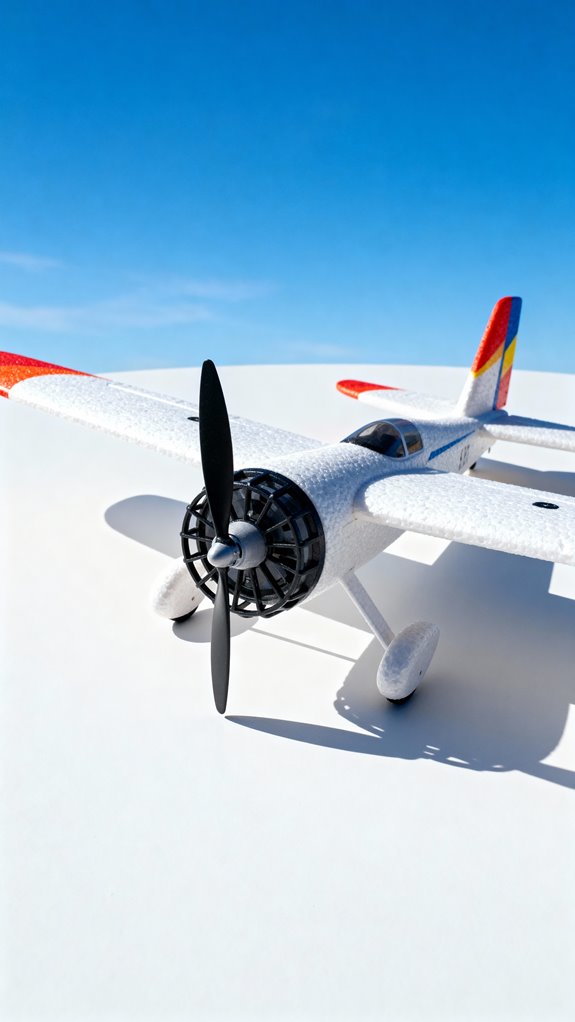
Guaranteeing safety and environmental considerations is essential for an enjoyable and responsible RC airplane flying experience. Practicing fundamental safety measures begins with selecting large, open spaces—fields or designated airfields—free from people and pets. This reduces the risk of accidents and disturbances while maintaining compliance with local regulations.
Pre-flight inspections are significant; pilots should check battery levels and perform radio range checks to verify safe operations. Additionally, selecting ideal weather conditions—clear skies and minimal wind—promotes better control.
Finally, being mindful of environmental impact helps maintain harmony with local communities and wildlife. Choosing quiet aircraft and minimizing noise can foster good relationships with surrounding areas. Together, these practices enhance both safety and environmental respect in the RC flying community. Incorporating safety features such as automatic shut-off timers in your aircraft can further enhance safe flying experiences.
Essential Electronics and Control Components
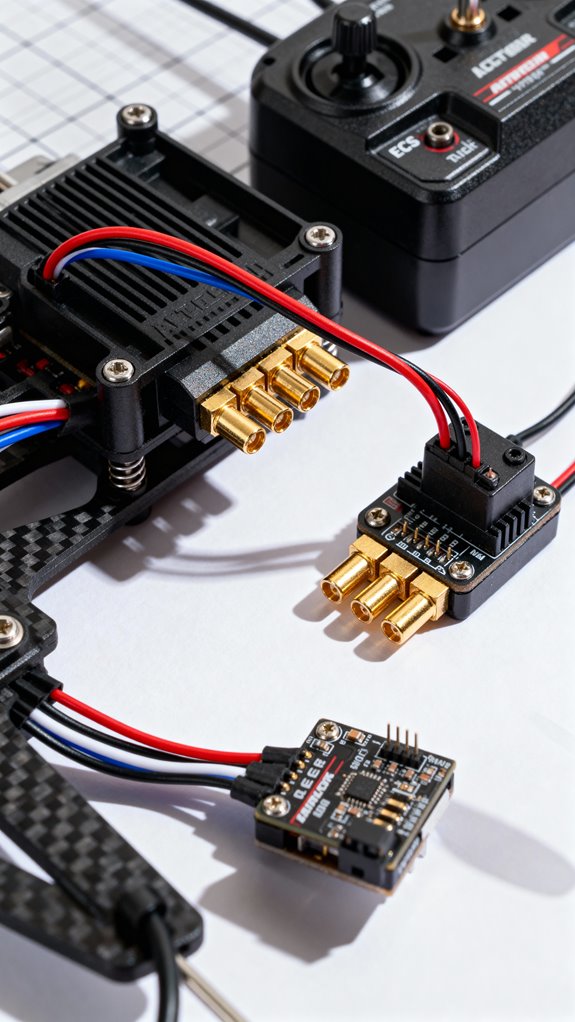
The essential components of an RC airplane’s electronic system work together to deliver an exhilarating flying experience. Key elements include:
- Transmitter Types: Choose between 2.4GHz transmitters that support 3 to 6 channels for effective control.
- Receiver Range: Ascertain compatibility with your transmitter for reliable signal connections.
- ESC Features: Select Electronic Speed Controllers that manage power to the motor and include a Battery Eliminator Circuit, powering the receiver and servos.
- Servo Selection: Lightweight servos enhance responsiveness. Match them to control surfaces for precise handling.
- Battery Management: Lithium Polymer (LiPo) batteries provide power, requiring careful management for performance and safety.
- Motor Compatibility & Propeller Sizing: Match motor specifications to guarantee peak thrust and flight performance considering weight considerations. Additionally, customizable settings in light therapy lamps can help enhance your mood and energy during your preparation for flying.
Recommended Products
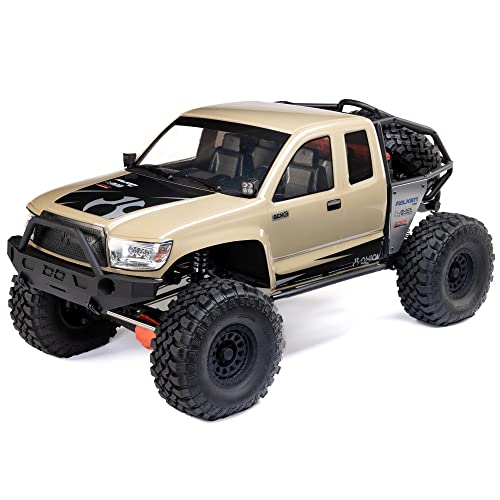

The ultimate ARRMA 1/5 scale ready-to-run Stunt Truck

New Clipless body: The Clpless body makes it easy to change batteries quickly and maintenance. By pressing a button on the bonnet and on the loading area, the mechanism is actuated.
Choosing the Right Durability and Cost
Choosing a first RC airplane involves more than just understanding the electronics; it greatly hinges on balancing durability with cost. Beginners should assess various durability factors, including the materials used in construction.
- Foam Planes: Highly durable, forgiving during crashes, and easy to repair with foam-safe glue, making them ideal for newcomers.
- Balsa Wood Planes: Traditional but less resilient, with potential repair costs ranging from $50 to $200.
Conducting a thorough cost analysis is essential. Entry-level models start around $400, but additional components can inflate costs. Budgeting for spare parts and repairs is vital due to the likelihood of crashes in the learning phase. Prioritizing durable materials can reduce long-term expenses and enhance the joy of flying. Additionally, considering the safety features of the airplane can further ensure a worry-free flying experience.
Recommended Products

Dual 70mm inrunner 12 bladed EDFs and high-quality 80A ESCs provide ample thrust

Realistic Design – Faithfully replicates the UH-1Y with meticulous detailing, authentic structure, and premium craftsmanship, making it a must-have for collectors and aviation enthusiasts

Big size warbird - wingspan 1700mm/66.9in , Overall Length 1,480mm/52.2in, brushless 5060 KV300 motor, 85A ESC, 6S configuration
The Best Beginner-Friendly Plane Options
When venturing into the world of remote control airplanes, beginners encounter a variety of user-friendly options designed to ease their learning curve.
HobbyZone Sport Cub S2
This high-wing trainer features a 1130mm wingspan and SAFE technology for enhanced stability, making it ideal for calm conditions.
Volantex Ranger 757-3
Boasting a 1500mm wingspan and durable foam construction, it provides stability and easy assembly, perfect for beginners.
FMS PA-18 Super Cub
With a 1300mm wingspan, it offers great maneuverability and functional flaps, simplifying short takeoffs and landings.
Dynam RC Primo Bigfoot STOL
Its 1450mm wingspan and large wheels facilitate easy control.
These beginner models enhance flight techniques through stability and are designed for quick assembly, ensuring an accessible entry into the hobby. Additionally, understanding proper electrode placement can significantly improve the effectiveness of related activities, paralleling the importance of stability in flight.
Recommended Products

Full-frame Power: 24.5MP BSI-CMOS FX-format sensor and EXPEED 7 processing engine unlock high-resolution, high-speed shooting up to 30fps.

Go Beyond Your Phone: Capture lifelike colors and incredible details from dawn to dusk thanks to a superior 20.9-megapixel DX format (APS-C size) sensor several times larger than that of a typical smartphone, but still lightweight and compact enough to fit in a small bag.

Advanced Flight Control with GPS & Return-to-Home: Equipped with a 16V high-power motor and H1 flight controller featuring omnidirectional positioning, the FLYWING EC135 supports stable upright/inverted GPS-assisted hovering.
The Role of Stability Aids for New Pilots
For new pilots entering the domain of remote control (RC) flying, stability aids serve as an invaluable asset during their learning journey. These technologies enhance stability benefits, making flying more manageable and enjoyable.
Key Features of Stability Aids:
- Types: Common options include gyroscopes, accelerometers, and advanced flight controllers.
- Stabilization Systems: Features such as SAFE and AS3X help maintain level flight, correcting deviations automatically.
Benefits for New Pilots:
- Learning Enhancement: Stability aids ease the learning curve, allowing beginners to focus on mastering fundamental controls without constant corrections.
- Weather Resilience: These systems enable pilots to fly safely in various weather conditions, boosting confidence and reducing the risk of crashes.
Stability aids foster a supportive flying environment, allowing new enthusiasts to thrive.
Preparing for Your First Flight
As new pilots become familiar with the advantages of stability aids, preparation for the first flight stands as a pivotal step in their RC flying journey. Effective flight preparation begins with a thorough checklist, guaranteeing safety and performance.
Checklist Essentials:
- Battery Charge Level: Always check the battery to prevent mid-air power loss.
- Control Surfaces: Inspect ailerons, elevators, and rudders for proper movement and response.
- Airframe Condition: Look for any rips or loose components that might jeopardize safety.
- Propeller Security: Verify the propeller is tightly fastened before takeoff.
Maintenance Tips for RC Airplanes
Proper maintenance is essential for ensuring the longevity and performance of RC airplanes. Following a reliable maintenance checklist can enhance the flying experience.
Routine Cleaning and Inspection
After each flight, use soft brushes and compressed air to clean delicate components, removing dirt and debris. Inspect control surfaces for damage, ensuring all screws and fasteners are secure.
Battery and Electronics Care
Remove batteries post-flight, storing them in a cool, dry place. Regularly check connections for corrosion and balance charge LiPo batteries to extend their lifespan.
Motor and Propeller Maintenance
Clean motors frequently to prevent overheating and inspect propellers for any damage. Tighten propeller nuts securely without over-tightening.
With diligent cleaning techniques and inspections, RC enthusiasts can enjoy the thrill of flying with peace of mind.
Resources for Learning and Community Support
Accessing resources for learning about RC airplanes and finding community support can greatly enhance a beginner’s experience.
Online Resources
- Flight simulators like FMS provide free practice with trainer aircraft, while Real Flight offers a premium experience.
- Connect transmitters, such as Futaba, to enhance training.
RC Clubs and Associations
– Joining local clubs grants access to AMA-approved flying sites and mentorship from seasoned pilots. Events and workshops foster community engagement.
Educational Programs
– Flite Test STEM Education helps integrate RC aviation into learning, offering kits and resources for quick start.
Tutorials and Forums
– YouTube series and websites provide step-by-step guides. Online forums encourage discussions and allow sharing of experiences, connecting beginners with the community.
Frequently Asked Questions
What Is the Best Age to Start Flying RC Airplanes?
Many young enthusiasts enthusiastically await their first flight. The best age to start flying RC airplanes is 10 to 14, as beginner recommendations align with essential child development stages, fostering coordination, safety, and joyous learning experiences.
Can I Fly RC Airplanes Indoors?
Yes, one can fly RC airplanes indoors if sufficient space requirements are met. Indoor flying provides a welcoming environment, free from weather distractions, fostering a sense of community among enthusiasts sharing a passion for flight.
How Long Does It Take to Learn to Fly?
Tom learned to fly his RC airplane in about three weeks through dedicated practice sessions. Utilizing flight simulators greatly accelerated his progress, allowing him to master controls before facing real-world challenges, fostering a sense of community with fellow enthusiasts.
Do I Need a License to Fly RC Airplanes?
A license is not required to fly RC airplanes, but operators must adhere to RC regulations and airspace requirements. Understanding these rules fosters a sense of belonging within the community of responsible hobbyists.
What Weather Conditions Are Ideal for Flying?
Ideal weather conditions for flying include light to moderate wind, ensuring manageable control. Additionally, temperatures should be mild to protect battery performance, allowing enthusiasts to fully enjoy their flying experience while fostering camaraderie among fellow hobbyists.


