As an Amazon Associate, we earn from qualifying purchases. Some links on this site are affiliate links at no extra cost to you. Our recommendations are based on thorough research and editorial judgment.


What Is An EDF (Electric Ducted Fan)?

An Electric Ducted Fan (EDF) is a propulsion system featuring a fast-spinning, multi-bladed fan enclosed in a cylindrical duct, powered by an electric brushless motor. This design enhances speed and thrust, achieving exhaust velocities of 180-200 MPH while minimizing noise levels. The enclosed structure also increases safety, reducing risks for ground personnel. EDFs are favored in unmanned aerial vehicles and high-performance model aircraft. Explore further to discover the innovative applications and future developments shaping EDF technology.
Key Takeaways
- An EDF is a propulsion system featuring a fan enclosed within a duct, driven by an electric brushless motor, enhancing efficiency and safety.
- The ducted design increases thrust and reduces noise, making EDFs suitable for applications in urban environments and unmanned aerial vehicles.
- EDFs achieve high exhaust velocities of 180 to 200 MPH, contributing to their popularity in high-performance model aircraft.
- Key advantages include reduced noise levels, enhanced thrust-to-power ratio, and lower maintenance requirements compared to traditional propulsion systems.
- Challenges include the need for precise manufacturing, thermal management, and balancing thrust output with power consumption.
Definition and Basic Concept
You may be interested



Electric Ducted Fans (EDFs) provide an innovative and efficient means of propulsion, especially in the domain of model aircraft. These propulsion devices consist of a fast-spinning fan enclosed within a cylindrical duct, commonly known in EDF terminology.
Core Features:
- Multi-Bladed Fan: Spins at high RPM for enhanced speed.
- Electric Brushless Motor: Powers the fan without fuel combustion.
- Ducted Design: Increases thrust and reduces noise compared to traditional propellers.
Benefits:
- Efficiency: The duct optimizes airflow, improving performance.
- Safety: The enclosed fan protects both the blades and personnel.
- Accessibility: EDF innovations make them an affordable option for aviation enthusiasts, allowing for intuitive control and lower maintenance. Additionally, TENS units often rely on similar principles of efficient power delivery for optimal performance.
Aerodynamics and Performance Characteristics

Aerodynamics plays an essential role in the efficiency and performance of Electric Ducted Fans (EDFs), greatly influencing how these devices operate in various conditions.
- Airflow Behavior: Within the EDF, intake and exhaust velocities often exceed external airspeed, which enhances thrust production while minimizing airframe drag. For example, a typical 90mm EDF achieves exhaust velocities between 180 and 200 MPH.
- Design Considerations: Shortening duct length can reduce boundary layer thickness, thereby optimizing performance. However, this must be carefully balanced to prevent flow separation, which can undermine thrust.
- Efficiency Gains: The duct design reduces tip vortices and induced drag, leading to improved efficiency compared to traditional propellers. Proper aerodynamic shaping of the duct’s lip further enhances airflow dynamics and thrust stability, essential for flight reliability. Additionally, similar to how light therapy devices can promote healing through optimized design, EDFs also benefit from carefully crafted aerodynamics to ensure peak performance.
Advantages Over Traditional Propellers

The advantages of Electric Ducted Fans (EDFs) over traditional propellers are significant, making them an increasingly popular choice for modern aircraft.
Safety Benefits
EDFs feature an enclosed design, enhancing safety for ground personnel and reducing the risk of accidental contact with blades.
Noise Reduction
The duct structure minimizes noise levels, making EDFs ideal for urban settings, supporting community acceptance and regulatory compliance.
Thrust Augmentation and Efficiency
EDFs provide superior thrust per power input, allowing for more efficient operation in compact designs.
Enhanced Control and Maneuverability
These fans offer smoother throttle modulation, essential for precise operations in confined spaces.
With lower maintenance requirements and cost efficiency, EDFs represent a forward-thinking option for today’s aviation enthusiasts and professionals alike. Additionally, the safety features of these devices contribute to their growing adoption in various applications.
Disadvantages and Engineering Challenges

Charting the world of Electric Ducted Fans (EDFs) presents several disadvantages and engineering challenges that engineers and designers must meticulously address.
Manufacturing Challenges
- EDFs require precise manufacturing to guarantee maximum duct geometry, complicating production compared to open rotors.
- Variations in quality can result in inconsistent tip clearances, negatively affecting thrust efficiency.
Thermal Management
- High-speed operations generate significant heat, demanding effective thermal dissipation for motor reliability.
- The confined ducted design limits airflow for cooling, potentially leading to overheating.
Performance Limitations
- Smaller blade diameters require more electrical energy for equivalent thrust, impacting energy efficiency.
- Balancing thrust output and power consumption remains a significant hurdle, complicating overall EDF design.
Addressing these challenges is essential for enhancing EDF performance and reliability in various applications, which can also benefit from deep tissue penetration techniques used in infrared heating pads.
Applications and Use Cases

Electric Ducted Fans (EDFs) showcase a remarkable range of applications across various industries, addressing specific propulsion and control needs.
UAV Applications
EDFs are increasingly favored in Unmanned Aerial Vehicles, delivering compact size and efficient thrust. They enable impressive performance, offering vertical climbs and jet-like speeds while extending flight times—crucial for enterprise missions. The efficiency of these systems can be likened to the multiple light therapy options provided by advanced skincare technologies.
Model Aircraft
In the sector of hobbyist aviation, EDFs are popular among builders of high-performance model aircraft. These fans allow scale models to exceed speeds of 200 mph, outperforming traditional turbojet models. They also provide quieter, lightweight alternatives, ensuring simplicity and lower operating costs.
Thus, whether in military, commercial, or recreational contexts, EDFs are defining the future of aerial technology.
Recommended Products

[ENERGY EFFICIENT COOLING] Della 2 Zone 45000 BTU/h, 19 SEER2, 208-230V, ETL Listed, AHRI Certified pre-charged air conditioner unit features a ductless mini split inverter plus system with a heat pump (up to -13℉/-25℃) and DC Inverter technology provides up to 30% power savings. (This model does not support the Self-Cleaning Function. The option will still show on the display after pressing the self-cleaning button, the self-cleaning operation will not be performed.)
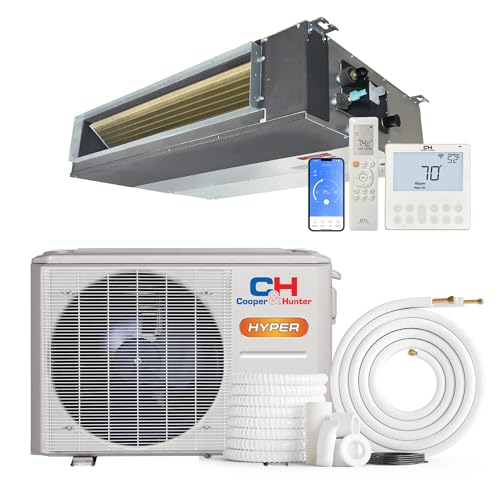
Cooper & Hunter 12,000 BTU, 230V, 20 SEER2, Hyper Heat Series Single Zone Outdoor Condenser with one Concealed Slim Ducted Air Handler. Remote control and Wall Thermostat to control your system, or use the built-in smart kit to control the system from your smartphone with the C&H app.
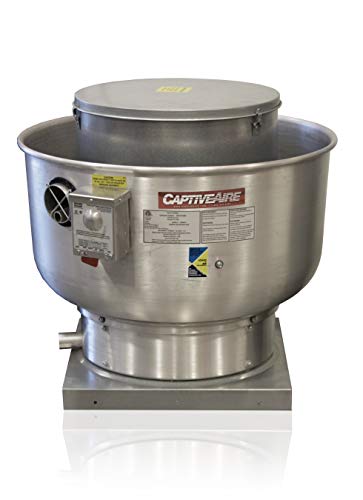
High Speed Direct Drive Centrifugal Upblast Exhaust Fan with speed control, disconnect switch and 10-1/2" wheel.
Design Considerations and Operational Factors
When designing an Electric Ducted Fan (EDF), several key considerations emerge that impact both performance and operational efficiency.
Aerodynamic Design
The length of the duct plays an essential role; shorter ducts reduce weight but may cause flow separation, affecting efficiency. Blade design uses advanced theories for torque and power predictions.
Structural Integrity
Ducts are often made for 3D printing, leading to complex designs and lighter assemblies. Material choice is significant for effective thermal management because motors generate substantial heat at high speeds.
Thermal Management
Maintaining proper airflow and minimizing thermal buildup protects components, enhancing EDF durability. Continuous monitoring can confirm that operations stay within ideal thermal limits, ensuring safety and performance. Additionally, effective heating pads can provide relief from menstrual cramps by utilizing similar thermal management principles to maintain consistent heat distribution.
Thrust Efficiency and Power Modeling
Thrust efficiency and power modeling are essential aspects of understanding Electric Ducted Fans (EDFs) and their performance in various applications.
- Thrust Calculation: EDFs typically achieve a thrust coefficient of around 0.16 during static hover. This efficiency plays a key role in determining how effectively the fan can operate under different conditions.
- Power Efficiency: The figure of merit (FoM) is usually about 50%, showing the balance of useful power output relative to input power. Electric power input can be accurately monitored, revealing consumption slightly above theoretical values.
- Optimized Design: Maintaining proper intake and exhaust ratios improves thrust and minimizes energy losses. A well-designed EDF achieves maximum thrust for each watt consumed, paving the way for improved flight performance. This meticulous attention to design ultimately enhances the user’s experience.
Recommended Products

Unique and optimized airframe design improves low speed handling and slow speed performance, making it possible to learn to fly radio-controlled (RC) airplanes successfully with a jet

S-EDF 105mm Semimetallic-Electric Ducted Fan series products,taking into account the toughness of plastic materials and the steeliness of metal materials,overcome many shortcomings of the above two materials.

S-EDF 120mm Semimetallic-Electric Ducted Fan series products,taking into account the toughness of plastic materials and the steeliness of metal materials,overcome many shortcomings of the above two materials.
Noise Reduction Mechanisms
Various innovative noise reduction mechanisms have become essential in enhancing the performance of Electric Ducted Fans (EDFs).
Aerodynamic Design Adjustments
- Blade Tip Clearance Reduction: Minimizes turbulence noise.
- Blade Leaning: Reduces noise through effective phasing of turbulence ingestion.
- Leading Edge Serrations: Disrupt sound generation mechanisms for improved acoustic behavior.
Active Noise Control
– Uses adaptive sensors to target specific acoustic modes, achieving approximately 18 dB reductions in exhaust noise.
Passive Acoustic Treatments
– Incorporating acoustic materials like spiral metamaterials efficiently attenuates specific frequency bands.
Safety Features and Benefits
Electric Ducted Fans (EDFs) feature an array of safety enhancements, making them a reliable choice for various applications.
Physical Safety Enhancements
- Duct Enclosure: The full duct prevents accidental contact with spinning blades, protecting personnel and nearby objects.
- Rigid Construction: This design resists deformation, guaranteeing safe clearances and preventing catastrophic failures.
Operational Safety Benefits
- Smoother Airflow: Reduced turbulence enhances thrust predictability, minimizing mechanical stresses and system failures.
- Power Efficiency: EDFs offer better thrust-to-weight ratios, promoting safety margins in flight.
Fire and Electrical Safety
– Electric Motors: They eliminate combustion-related hazards, while integrated safety features guarantee operational reliability.
Maintenance Safety
– Simplified Design: Fewer moving parts reduce risks during inspections, enhancing overall safety and performance.
Future Developments in EDF Technology
As advancements in technology continue to reshape the aerospace landscape, future developments in Electric Ducted Fans (EDFs) are poised to revolutionize flight dynamics and efficiency.
- Power and Weight: StellarJet’s EDF, delivering 132 kW and 1700 N thrust at just 14.7 kg, showcases significant power-to-weight improvements.
- MagLev Innovations: The integration of magnetic levitation technology aims to enhance propulsion efficiency, while MagLev Aero’s tip-driven design improves hover lift by 58%, highlighting future trends in EDF design.
- Noise Reduction: Ongoing research focuses on reducing noise levels through improved duct geometries and aerodynamic strategies, crucial for urban air mobility acceptance.
These technological innovations not only maximize performance but also align with environmental initiatives, paving the way for a cleaner, quieter future in flight.
Comparison With Other Propulsion Systems
While comparing Electric Ducted Fans (EDFs) to traditional propulsion systems, several key factors stand out, highlighting the unique advantages of EDF technology.
Static Thrust Performance
EDFs outperform open propellers by approximately 26% in static thrust. The duct design enhances mass flow and thrust while minimizing noise.
Noise and Safety
The duct not only protects fan blades but also dampens noise, making EDFs safer for personnel and quieter than exposed propeller systems.
Weight and Complexity
EDFs are generally heavier and more complex due to their duct systems. However, they enable distributed propulsion, balancing weight and efficiency in advanced applications like eVTOL.
Efficiency Variation
At lower speeds, EDFs excel; however, open propellers regain efficiency at higher velocities, highlighting the need for thoughtful EDF comparisons in propulsion alternatives.
Recommended Products
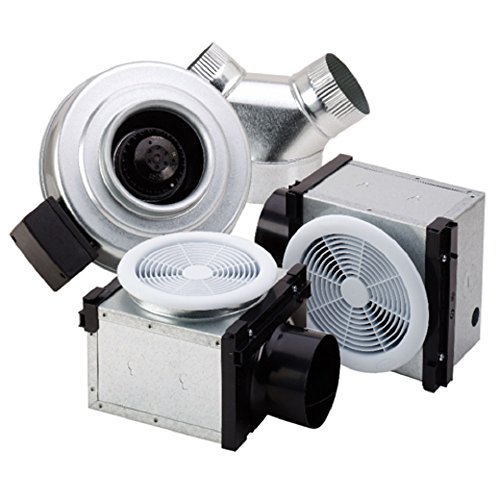

High-Power Performance: Equipped with a robust 1HP motor, delivering an impressive airflow of 5000 CFM for effective ventilation in confined spaces.

Frequently Asked Questions
How Do I Maintain an Electric Ducted Fan?
To maintain an electric ducted fan, embrace vital maintenance tips: remove debris, guarantee lubrication, and regularly inspect components. Troubleshooting common issues will enhance performance, fostering unity among enthusiasts committed to peak fan operation and safety.
What Noise Levels Can I Expect From an EDF?
EDF sound typically ranges from 50 to 70 dB, exceeding ambient noise levels. Noise measurement standards help predict sound output, ensuring users can choose models that align with their sensitivity to noise in enclosed spaces.
Are EDFS Suitable for Marine Applications?
EDFs are suitable for marine applications due to their advantages like quieter operation and improved maneuverability. However, they face limitations such as higher power demands and reduced efficiency in water compared to traditional propulsion methods.
Can EDFS Be Used for Hovercraft Designs?
Yes, EDFs can enhance hovercraft designs, ironically sacrificing static pressure for finesse. While their propulsion improves maneuverability, limitations in lift can challenge hovercraft performance. Yet, enthusiasts find joy in optimizing their creative solutions for unique builds.
What Materials Are Best for EDF Construction?
The best materials for EDF construction combine composite materials for stiffness and reduced weight with lightweight metals for heat dissipation and structural integrity. This combination fosters performance and durability, appealing to enthusiasts seeking reliable, high-quality designs.