As an Amazon Associate, we earn from qualifying purchases. Some links on this site are affiliate links at no extra cost to you. Our recommendations are based on thorough research and editorial judgment.

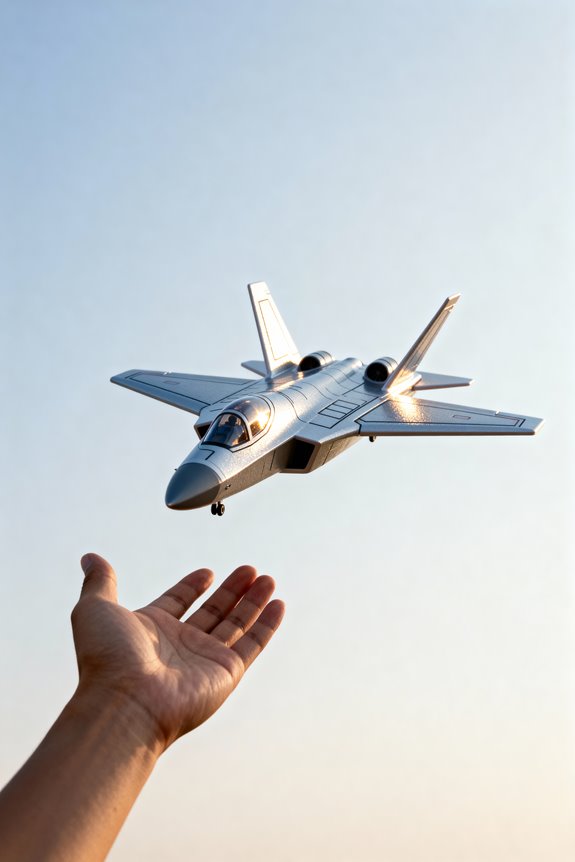
Are There RC Jets That Can Be Hand Launched?

Yes, there are RC jets designed for hand launching. These models, like the Eachine F-16 EDF and ParkZone Stryker, are lightweight and feature electric ducted fans (EDFs) ranging from 40mm to 70mm. They provide an exciting flight experience with high thrust-to-weight ratios, making takeoffs easy. Additionally, gyroscopic stabilization enhances control, assisting beginners. With proper launching techniques and community support, pilots can improve their skills and guarantee safer flights. Discover more about the features and tips for hand launching.
Key Takeaways
- Yes, there are RC jets specifically designed to be hand launched, making takeoffs without a runway easy for pilots.
- Popular hand launchable models include the Eachine F-16 EDF and ParkZone Stryker, known for their lightweight construction.
- These jets typically feature electric ducted fan (EDF) units for efficient thrust and enhanced performance during flight.
- Key features often include gyroscopic stabilization systems and compact designs for quick assembly in the field.
- Hand launchable RC jets are suitable for all skill levels and provide a realistic flight experience.
Overview of Hand Launchable RC Jets
You may be interested

10 Best RC Jet Fighters for Thrilling Aerial Adventures in 2026
October 27, 2025


Are EDF Jets Hard To Fly?
October 27, 2025
Hand launchable RC jets represent an exciting facet of remote-controlled aircraft, catering to both novices and seasoned pilots alike. These jets, designed for simplicity and ease of use, allow for takeoffs without a runway. Lightweight foam models and electric ducted fan (EDF) jets are popular choices, featuring design innovations that enhance flight stability.
Popular Models:
- Eachine F-16 EDF: Known for its stability and built-in flight stabilization.
- ParkZone Stryker: Excellent for learning hand launch techniques.
- Zhiyang ZY425 Land Sea Air: A versatile model that offers multiple launch methods.
These hand launchable jets promote accessibility for casual flyers and facilitate practice in various environments, fostering a sense of community among users. Additionally, enthusiasts often appreciate the quiet operation of these models, which enhances the flying experience in diverse settings.
Recommended Products

【Easy Hand Launch for Instant Flying Fun】 Skip complicated setups and enjoy flying within seconds. Simply toss the airplane into the air or use one-key takeoff to begin an exciting flight. Designed especially for kids and beginners, this RC airplane makes learning to fly simple, enjoyable, and frustration-free.

Easy Hand Launch for First-Time Flyers: Just toss it into the air and start the fun. Auto hover helps beginners feel steady and learn faster from the very first flight.

Powerful 7400KV1104 Brushless Motor-performance 1104 brushless motor delivering 7400KV, this ducted fan aircraft ensures exceptional thrust(Thrust-to-weight ratio>1.2)and smooth operation. The 4-channel system offers precise control for effortless flight and impressive aerobatics. Fly with confidence and enjoy every maneuver!
Features to Look for in Hand Launchable Jets

When exploring the world of hand launchable RC jets, several key features stand out as crucial for guaranteeing an enjoyable flying experience.
Airframe Design
Lightweight materials, like EPO foam, enhance durability while reducing weight. Aerodynamically optimized airframes facilitate smoother launches.
Power System
Electric Ducted Fan (EDF) units between 40mm and 70mm deliver efficient thrust. Brushless motors provide better flight control.
Stability Enhancements
Gyroscopic stabilization systems and lightweight control surfaces improve low-speed handling. Multiple flight modes cater to varying skill levels.
Launching Ergonomics
Contoured fuselages provide stability, while easy-to-remove landing gear minimizes drag during takeoff. Compact designs enable quicker assembly in the field. TENS units, which use electrical muscle stimulation, can enhance muscle recovery and improve pilot performance during practice sessions.
These design innovations and stability enhancements are essential for a reliable and enjoyable hand launch experience, fostering greater confidence among pilots.
Recommended Products

All the EDF with motor have already dynamic balance tested.Running smoothly,Easy cooling,Stable structure,Safe and durable,excellent realistic sound.Make your plane more Efficient and stable.All the motor has been soldered the banana plug.

-Powerful 4S-compatible outrunner motor with 12-blade 64mm fan delivers excellent top speed and vertical performance plus turbine-like sound

A modified version of the popular Habu STS that offers nearly unlimited vertical performance, more speed and even more aerobatic capability
Recommended Techniques for Hand Launching

Launching an RC jet successfully requires a blend of technique and understanding of the aircraft’s capabilities.
Launch Position and Orientation
Launch facing into the wind to enhance airflow over the wings for better lift. Holding the aircraft at head height allows for ideal control during release. Aim for a slight nose-up launch angle while keeping the plane level to prevent stalling.
Power and Throttle Management
Apply full throttle before and during the launch. Maintaining maximum throttle guarantees sufficient thrust and airflow to avoid a stall.
Launch Technique
Execute a firm, forward push combined with a step for speed. Use smooth, controlled motions to prevent abrupt pitching.
Post-Launch Control
Immediately apply elevator inputs to establish a positive climb, ready to adjust for any roll tendencies. Incorporating essential oil benefits can enhance focus and clarity during your flight preparations.
Benefits of EDF Jets for Hand Launching

Diving into the advantages of electric ducted fan (EDF) jets for hand launching reveals several compelling features that enhance the flying experience.
Realistic Flight Experience
EDF jets closely mimic real aircraft, producing jet-like sounds and appearances. This scale authenticity appeals to hobbyists, enriching their flying adventures.
Lightweight Design
Typically smaller and lighter, EDF units facilitate easy hand launches. Their compact size allows for simplified launching techniques, eliminating the need for landing gear.
Efficient Thrust Production
The design enhances thrust-to-weight ratio, enabling strong initial acceleration during launches. High RPM brushless motors provide efficient performance essential for hand launching.
Safety and Ease of Use
Modern EDF jets often include flight stabilization and gradual throttle ramp-up, aiding beginners while ensuring smooth takeoffs. Overall, these EDF advantages make them ideal for an enjoyable hand-launching experience. Additionally, the adjustable settings in these jets contribute to a more tailored flying experience for users.
Recommended Products


✈️Suitable for beginners: The "64mm Futura" is a remote controlled jet airplane designed specifically for beginners, boasting excellent flight performance. Equipped with basic systems, it is an adult remote-controlled aircraft tailored for entry-level jet pilots.
Key Power and Propulsion Considerations

Key power and propulsion considerations play an essential role in the successful hand launching of RC jets.
- Thrust Requirements: A thrust-to-weight ratio of at least 1:1 is ideal for achieving a stable climb. This guarantees the jet can sustain lift immediately after launch.
- Battery Selection: Choosing the right LiPo battery (e.g., 2-3S for smaller planes) is vital. Higher cell counts increase voltage, enhancing motor RPM and thrust, promoting peak performance.
- Propeller Efficiency: Selection of appropriate prop sizes maximizes thrust and minimizes power consumption.
- Power Ratios: Adequate power-to-weight ratios improve flight stability and control.
- Launch Angle: Launching slightly nose-up helps achieve effective thrust, especially for EDF jets. Additionally, ensuring an optimal thrust-to-weight ratio is crucial to maintain lift during the initial stages of flight.
Integrating these elements guarantees smooth and successful hand launches.
Recommended Products

Appearance: Through advanced processing, the EDF housing and blades surface give you a sense of matt finish.

30mm Duct Fan with QF1611(1311) 7000KV Brushless motor ( assembled )

Advantages: All the EDF with motor have already dynamic balance tested.Running smoothly,Easy cooling,Stable structure,Safe and durable,excellent realistic sound.Make your plane more Efficient and stable.All the motor has been soldered the banana plug. Low-voltage protection threshold value can be set.
Common Challenges and Safety Measures
What are the common challenges and safety measures that RC pilots should consider when hand launching their jets?
- Launching Pitfalls: Incorrectly angled launches can lead to stalls and crashes. Pilots must focus on level flight and proper speed at release.
- Torque Management: Managing propeller torque is vital. Full or two-thirds throttle during launch can stabilize the plane, reducing unwanted roll due to torque.
- Thorough Inspections: A pre-launch check is important. Pilots should inspect servos, control surfaces, and the overall condition to guarantee safety.
- Environmental Awareness: Avoid launching in unstable conditions, like strong backwinds, which can complicate takeoff.
Practicing these techniques can notably enhance the piloting experience, ensuring safer and more enjoyable flights for all enthusiasts. Additionally, understanding safety features such as auto shut-off can further bolster the safety of RC operations.
Popular Models for Beginners and Experts
For those looking to explore the exciting world of hand-launched RC jets, selecting the right model can greatly enhance the flying experience.
Beginner Models:
- Arrows BAE Hawk 50mm EDF Jet: Known for its flight stabilization, this model provides stability for newcomers.
- E-flite F-14 Tomcat: Offers stable flight characteristics and flexibility for practicing launch techniques.
- Reno Aces Series: Ideal for intermediate beginners, it emphasizes important throttle management.
Expert Models:
- Freewing 6S Hawk T1 “Red Arrow” 70mm EDF: Precision and performance, designed for advanced pilots.
- Freewing L-39 Albatros 80mm EDF Jet: Features a customizable ARF PLUS design, perfect for optimizing performance.
- MiG-21 and F-16 (70-80mm EDF): Favored for their scale details and impressive flight capabilities, demanding refined launch techniques.
Recommended Products

Advanced Stunt Performance & Unmatched Stability: Experience thrilling 360° flips, smooth circles, and stable hovering with the advanced 6-axis gyro system. Our 6th-generation fighter jet model delivers precise control for dazzling aerial shows, making every flight exciting and accessible for both beginners and experienced pilots. Perform impressive rolls and tricks effortlessly in the backyard or park
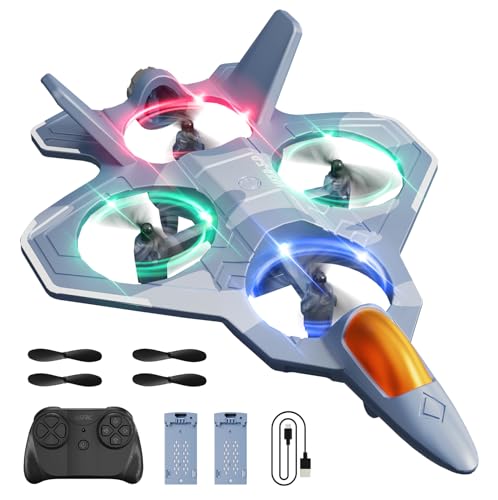
Various Fun Modes for Non - stop Flying: This remote control airplanes for kids responds instantly to forward/backward, ascent/descent, and left/right commands, while advanced features like headless mode, altitude hold and 3 speed modes keep flights smooth. It also has aerobatic rolls, 360° circling, and fast take-off!You can even try the amazing throw flight mode-throw it into the air and it will fly on its own, easily starting the flying adventure!

ENJOYABLE EASY CONTROL AIRPLANE: A great remote control jet airplanes for beginners. Rc plane have self-stabilization system so will more fun and easy. A beginner will learn to fly easily when tries 2-3 times.
Community Tips and Resources for Hand Launching
Engaging with the community surrounding hand-launched RC jets can greatly enhance a pilot’s skills and knowledge. One effective way to improve is through community sharing of hand launch techniques.
Tips from Fellow Pilots
- Practice Consistency: Maintain the same throttle during launch to reduce errors.
- Balanced Setup: Confirm the center of gravity is checked for easier handling.
- Tech Assistance: Use models with built-in hand launch assist features for stability post-launch.
Resources
- Video Tutorials: Many enthusiasts share videos online, showcasing successful techniques and troubleshooting tips.
- Forums: Connect with fellow pilots in forums to exchange experiences and advice, boosting confidence and skill development.
Together, these resources can empower pilots to achieve successful hand launches while fostering a sense of community.
Frequently Asked Questions
Can I Use Hand Launchable Jets in Small Spaces?
Hand launchable jets are suitable for small spaces, provided small space considerations and launch technique tips are followed. Proper control, wind direction awareness, and appropriate throttle management enhance flying experiences in confined environments, promoting successful launches and landings.
Are Hand Launchable Jets Suitable for Beginners?
Hand launchable jets are suitable for beginners, especially entry models like foam park jets. Following training tips, such as practicing in calm conditions and using adjustable throttle, can enhance confidence and safety during their learning journey.
How Do I Maintain Hand Launchable RC Jets?
To maintain hand launchable RC jets, one must regularly perform jet maintenance techniques, including thorough inspections and tightening control linkages. Effective launch preparation tips guarantee stability and reliability, fostering a sense of belonging within the flying community.
What Materials Are Hand Launchable Jets Typically Made From?
Hand-launchable RC jets typically utilize lightweight materials such as foam construction, combining durability with ease of use. These materials attract enthusiasts seeking approachable and engaging experiences in the exciting world of model aviation.
Can I Modify a Regular Jet for Hand Launching?
Regular jets can be modified for hand launching, utilizing innovative RC jet modifications and specific hand launch techniques. With careful adjustments to structure and grip, pilots may successfully elevate their models, igniting thrilling airborne possibilities.